
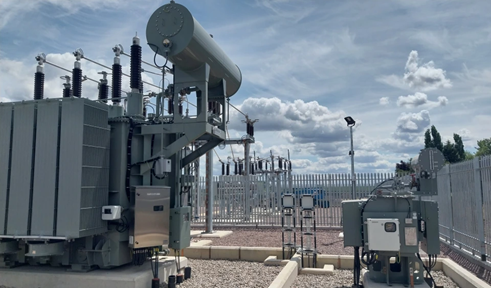
Across our project portfolio, the principles of the Construction (Design and Management) Regulations 2015 (CDM 2015) are embedded within how we plan, design and deliver complex electrical and infrastructure works. From renewable energy developments to high‑voltage substations and battery storage facilities, effective CDM management underpins safe, compliant and successful project outcomes.
CDM 2015 applies to all construction work, including new build, refurbishment, maintenance and engineering infrastructure. For specialist high‑voltage and grid connection projects — where risks are inherently higher — careful planning, defined responsibilities and early risk management are essential.
Our experience spans more than 1,500 projects delivered across the UK’s energy sector, giving us a practical understanding of how CDM duties translate into real‑world construction environments.
Applying CDM at the Start: Renewable Energy and Grid Connection Projects
A defining feature of CDM 2015 is its focus on early design‑stage risk reduction. This is particularly relevant on renewable energy schemes, where decisions taken during design significantly influence construction safety and long‑term asset performance.
On projects such as Tolldish Hall Solar Farm (25.2 MW) and Crimscote Solar Farm (45 MW), our scope included the full high‑voltage grid connection, substations and underground cable routes. Early coordination with designers, clients and network operators allowed buildability, access constraints and maintenance considerations to be addressed before construction began, reducing on‑site risk and improving programme certainty.
Similarly, at South Fambridge Hall Solar Farm (43.3 MW), early engagement during pre‑construction supported safe delivery of 132 kV contestable works and private‑side substation infrastructure, ensuring CDM duties were clearly defined and managed across multiple stakeholders.
CDM 2015: What Clients, Suppliers and Partners Need to Know
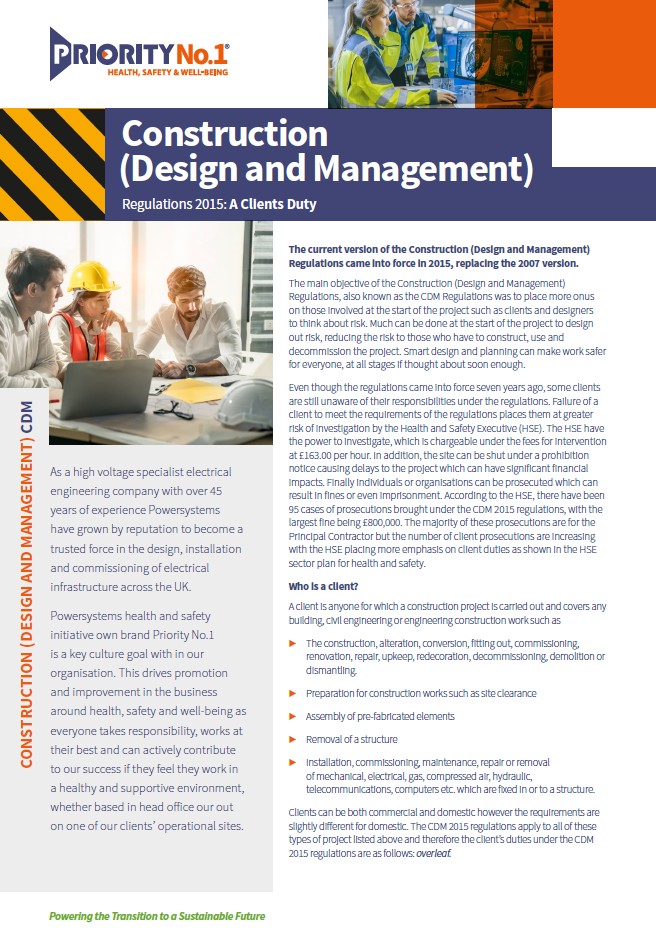
This guide provides a clear, practical overview of the Construction (Design and Management) Regulations 2015 (CDM 2015) and the responsibilities they place on clients and the wider project team. It explains why early planning, competent appointments and effective collaboration are critical to delivering safe, compliant construction projects.
With over 190 prosecutions and more than £16 million in fines issued under CDM 2015 to date—including individual penalties of up to £900,000—the consequences of non‑compliance are significant. This document is designed to help clients, suppliers and partners understand their duties, reduce risk, and support safer project delivery from concept through to completion.
Managing CDM Duties on Large‑Scale Wind Projects
Wind farm developments often involve remote locations, extensive cable routes and complex phasing — making effective CDM coordination critical.
On projects such as Crystal Rig IV Wind Farm (49.1 MW) and Limekiln Wind Farm (108 MW), we delivered the full Electrical Balance of Plant (EBoP), including 132/33 kV infrastructure, transformers, protection systems and extensive cabling across challenging terrain. CDM compliance on schemes of this scale requires robust planning, clear communication between duty holders and continual review of risk as construction progresses.
By embedding CDM principles into design reviews, construction phase planning and site management, we support clients in discharging their legal responsibilities while maintaining momentum on technically demanding programmes.
Supporting Client Duties on High‑Voltage and BESS Infrastructure
CDM 2015 places heightened responsibility on clients, many of whom may not routinely deliver construction projects. This is increasingly relevant on grid stability and battery storage schemes, where transmission‑level infrastructure introduces additional interfaces and risk.
On our current 275 kV Substation and BESS Infrastructure project, CDM considerations have been integral from the outset — from substation layout and earthing design to sequencing of cable installation, lifting operations and commissioning activity. Early design decisions have reduced reliance on procedural controls later in the programme, improving both safety and efficiency during construction.
We work collaboratively with clients to help them understand their CDM obligations, including the appointment and oversight of competent duty holders, suitable time and resource allocation and the maintenance of robust health and safety information.
CDM Through the Construction Phase and Into Handover
During construction, CDM responsibilities extend beyond documentation. Effective cooperation between the Principal Designer, Principal Contractor and contractors is essential to manage evolving risks.
Across our projects — whether delivering solar farms, wind farm EBoP or grid‑scale BESS facilities — we ensure:
- Construction Phase Plans are project‑specific and actively maintained
- Welfare arrangements remain suitable for the duration of works
- Design changes are reviewed for safety impact
- Health and safety information is effectively transferred when duty holders change
The CDM process continues through to completion. The Health and Safety File produced at handover is structured to support future operation, maintenance and upgrade works, ensuring compliance throughout the asset lifecycle.
Why Effective CDM Management Matters
Despite CDM 2015 being in force for over a decade, client duties remain one of the most common areas of non‑compliance. Since its introduction, there have been over 190 prosecutions under CDM regulations, with fines exceeding £16 million in total, reflecting increased regulatory focus on early planning and client leadership.
With the Health and Safety Executive placing growing emphasis on governance and accountability, effective CDM management is not only a legal necessity but a key contributor to successful project delivery.
A Consistent, Collaborative Approach
Across our projects, CDM compliance is not treated as a standalone exercise. It is integrated into our broader project management, design coordination and construction delivery approach.
By working in long‑term partnership with our clients, designers and supply chain, we help create safer construction environments, reduce risk exposure and support the delivery of resilient, compliant energy infrastructure that will serve the UK for decades to come.
Notes to Editors:
Contact Information:
- This article is written by Jules Daly, Marketing and Communications Manager at Powersystems.
- Email jules.daly@powersystemsuk.com Telephone 01454 318000
- Photography Copyright please credit all images used to powersystemsuk.co.uk
Powersystems are powering the transition to a sustainable future
Powersystems: The High Voltage Specialist of Choice
Powersystems is a leading employee-owned high voltage electrical engineering specialist with over 49 years of experience delivering safe, efficient, and high-quality infrastructure solutions across the UK.
As the first Lloyd’s NERS-accredited Independent Connection Provider (ICP), we have been delivering contestable grid connections up to 132 kV for over 29 years. Our trusted expertise spans the full project lifecycle—from design and installation to commissioning—supporting clients across renewable energy, utilities, and industrial sectors.
Since 2000, Powersystems has connected over 10 GW of renewable energy to the UK grid, including onshore and offshore wind, solar, hydro, tidal, and battery energy storage systems (BESS). We’ve also delivered critical infrastructure for electric vehicle charging, CHP, STOR, rotating stabilisers, and private wire networks.
Working in partnership with developers, contractors, and DNOs, we’ve connected 30% of the UK’s onshore wind farms—playing a vital role in the transition to Net Zero by 2050.
Our commitment to safety, sustainability, and innovation is embedded in our ISO-accredited integrated management systems and our ‘Priority No.1’ health and safety culture. We continue to invest in people, technology, and partnerships to remain the high voltage specialist of choice.
As an employee-owned business, Powersystems empowers every team member to contribute to our shared success. Our ownership model fosters a culture of collaboration, accountability, and continuous improvement—ensuring we deliver excellence for our clients, safely and efficiently.