
Delivering full 33 kV infrastructure, SCADA, protection and turbine array energisation for 10 Vestas turbines
Project Snapshot
| Client | RWE Renewables UK Onshore Wind Limited |
| Location | Camster II Wind Farm, Off A882, Haster, Wick, Scotland KW1 5SZ |
| Project Value | £2.89 million |
| Project Duration | Feb 2024 – Dec 2025 (including 1‑year DNO delay) |
| Market Sector | Renewable Energy – Onshore Wind |
| Services Delivered | Full Electrical Balance of Plant (EBoP) |
| Powersystems Fact | Powersystems has connected over 24% of all UK wind projects; Camster II marks another successful partnership with RWE and Farrans. |
Camster II Wind Farm Case Study
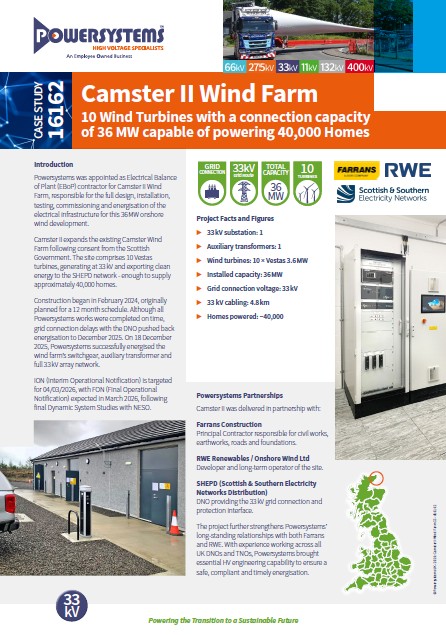
Download the full Camster II Wind Farm Case Study to explore how Powersystems delivered the complete 33 kV Electrical Balance of Plant for this 36 MW onshore development. The PDF provides a clear overview of the project’s design, installation, SCADA integration and energisation, detailing how the site now delivers clean renewable energy for around 40,000 homes. Ideal for engineers, developers and stakeholders looking for deeper technical insight into a modern, grid‑compliant wind farm project.
Client & Site Background
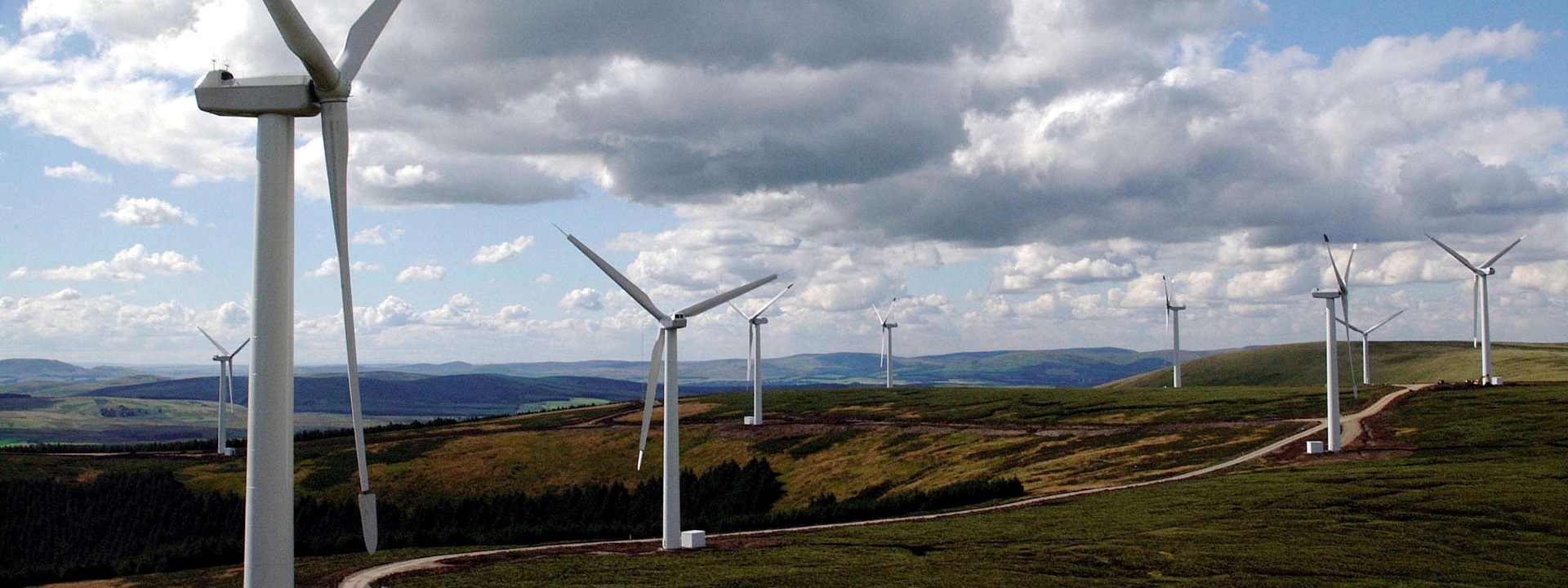
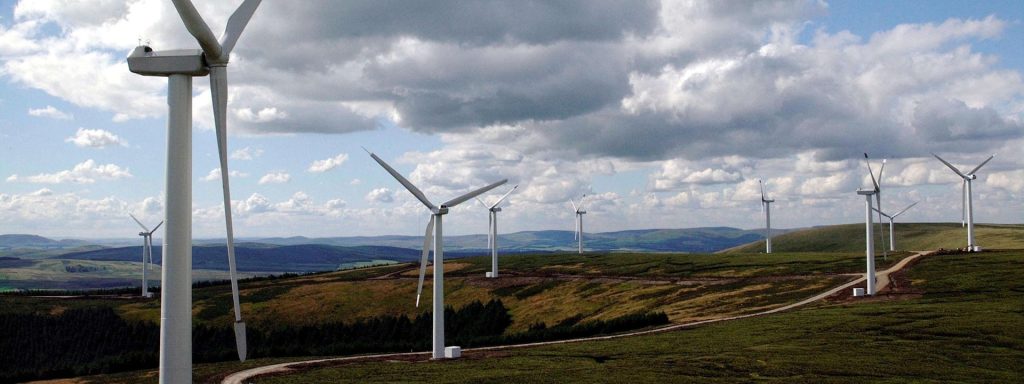
Camster II Wind Farm expands the existing Camster site in the Caithness region of northern Scotland.
Owned and operated by RWE Renewables, the development consists of 10 Vestas 3.6 MW turbines, generating a total 36 MW, exporting clean energy directly into the SHEPD 33 kV network.
The wind farm supports Scotland’s national strategy for increased renewable capacity and contributes clean electricity for approximately 40,000 homes.
Although Powersystems completed all electrical installation on schedule, the project experienced a one‑year grid‑connection delay from the DNO, pushing energisation to 18 December 2025.
The Challenge
The Camster II project required:
- A fully engineered 33 kV EBoP solution integrated into an existing wind farm environment
- Managing a revised programme due to grid connection delays
- Full compliance with SHEPD protection, control and SCADA requirements
- Delivering safe HV operations in a remote and weather‑exposed region
- Coordinating commissioning around ION/FON milestones (Mar 2026)
- Ensuring minimal ground disturbance and reduced environmental impact
Powersystems’ ability to remain flexible and maintain momentum during a prolonged grid delay was essential to delivering a safe, compliant and energised site.
Our Engineering Solution
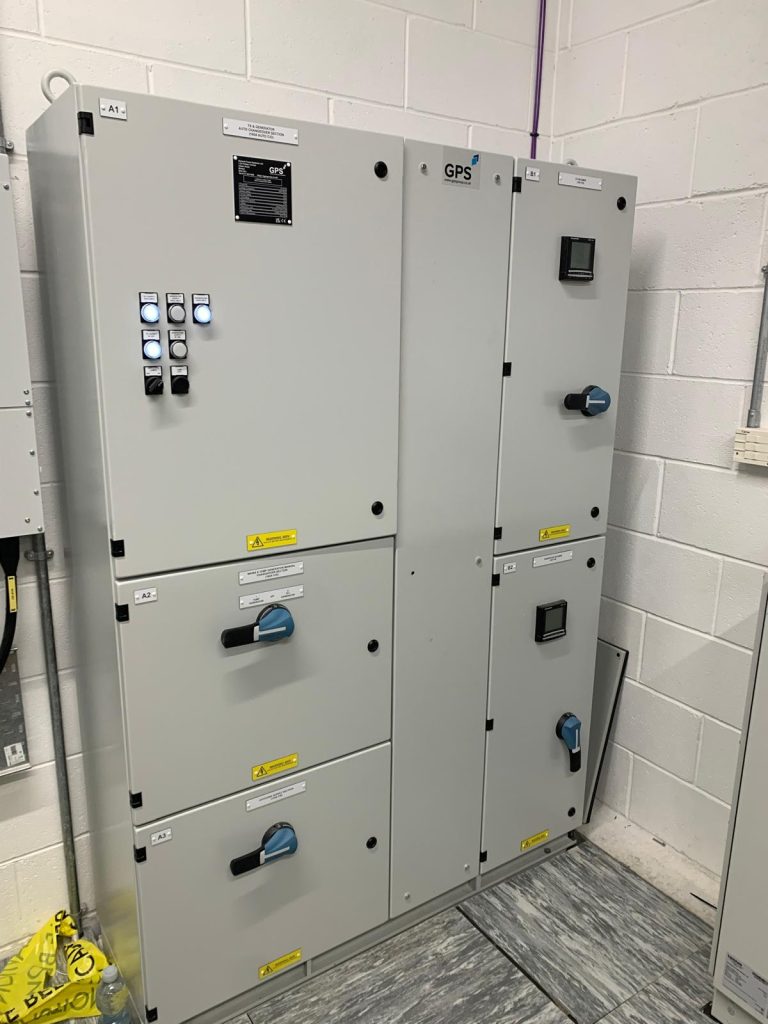
Powersystems delivered a turnkey electrical package for Camster II, including:
33 kV Substation & EBoP Systems
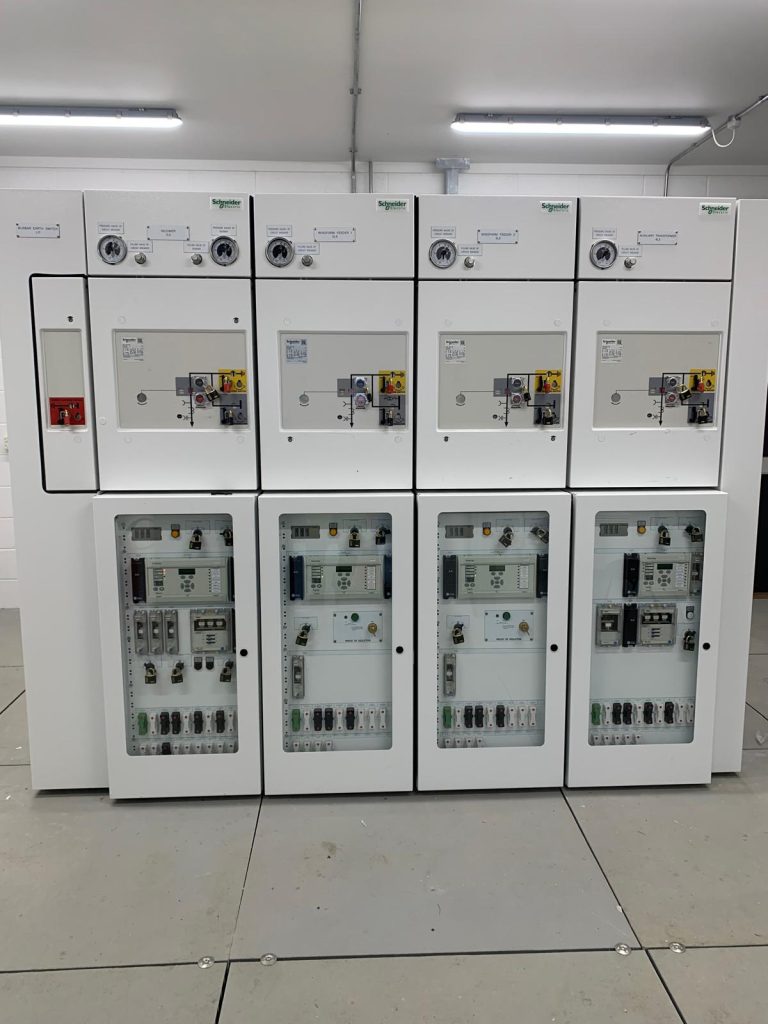
- 5‑panel Schneider WS 33 kV switchboard
- 4.8 km of 33 kV cabling across the two turbine arrays
- 33/0.415 kV auxiliary earthing transformer
- Full HV and LV cabling, jointing and terminations
- SCADA, fibre optics and control cabling
- Substation earthing and WTG earth systems
- LV distribution systems and 110 V DC battery chargers
- Substation lighting, heating, small power, fire and intruder alarms
- Compound lighting and control panels
Design Studies Delivered
- Load flow analysis
- Arc‑flash assessment
- Harmonics/G5.5 study
- P28 flicker study
- Cable loss calculations
- Earthing design
- Fault‑level modelling
- Lightning protection risk assessment
- Wind farm protection design
- Full RMS (Grid Code) compliance modelling
- Safety and regulatory compliance reviews
Project Process
- Feb 2024 — Mobilisation following civil works
- Feb–Jan 2025 — Installation of 33 kV cabling, switchgear, SCADA, LV services and substation systems
- Jan 2025 — Project ready for energisation, pending DNO availability
- Jan–Nov 2025 — One‑year DNO delay; Powersystems maintains readiness and HSEQ oversight
- Nov 2025 — Remobilisation and final verification
- 18 Dec 2025 — Successful energisation of switchgear, auxiliary transformer and full 33 kV array
- 4 Mar 2026 (Target) — ION (Interim Operational Notification)
- Mar 2026 (Final) — FON after NESO Dynamic System Studies
Project Facts & Figures
- 10 × Vestas 3.6 MW turbines
- 36 MW installed capacity
- 33 kV grid connection
- 4.8 km of 33 kV cabling
- 1 × 33/0.415 kV auxiliary transformer
- ~40,000 homes powered
- Full SCADA, protection & control integration
- Delivered in partnership with Farrans Construction and RWE Renewables
Technical Specifications
HV / MV Systems
- Schneider WS 33 kV switchgear
- 33 kV auxiliary earthing transformer
- HV cable systems for two turbine arrays
- Full WTG and substation earthing network
Control, SCADA & Communications
- SCADA system designed for SHEPD interfacing
- Fibre and control cabling across entire site
- LV and DC battery systems for protection equipment
- National Grid and SHEPD interface panel requirements
Protection & Compliance
- Directional earth fault and overcurrent protection
- Grid code compliance modelling (RMS)
- Harmonic and flicker checks
- Protection coordination study
- Point-on-wave switching capability
Substation Infrastructure
- Cabling containment
- Lighting and power systems
- Fire & intruder alarms
- Building services and compound lighting
Partnerships
- RWE Renewables UK Onshore Wind Ltd — Client & Owner
- Farrans Construction — Principal Contractor (civil works & roads)
- SHEPD — 33 kV DNO providing grid connection and protection interface
- Powersystems — EBoP Contractor (design, install, test, commission, energise)
Key Risks & Mitigations
- One‑year DNO grid connection delay – Mitigation: Maintained readiness; re‑inspection cycles; re‑commissioning strategy; close dialogue with SHEPD.
- Challenging northern climate – Mitigation: Weather‑resilient installation planning; HV safety controls; phased cable testing.
- Grid compliance and protection integration – Mitigation: Full suite of protection studies; RMS modelling; rigorous SHEPD interface testing.
- Remote site logistics – Mitigation: Pre‑ducted cable routes; efficient transport planning; reduced ground excavation.
Environmental Considerations
- Low‑impact electrical design
- Minimal excavation using efficient ducting and fibre solutions
- Modern, efficient switchgear and transformer systems
- Supports Scotland’s pathway to net‑zero emissions
- Contributes clean energy for ~40,000 households
Economic & Social Value
Over a 25-year lifespan, Camster II will:

- Provide a long-term community benefit fund
- Support ~500 Scottish jobs, including 150 in the north
- Strengthen regional supply chains
- Deliver sustained local economic investment
- Support RWE’s wider portfolio of UK renewable asset development
Future Prospects
Camster II is engineered for long-term performance, delivered to modern HV standards and ready for additional grid‑code updates. The successful commissioning further strengthens Powersystems’ track record with RWE and SHEPD and helps progress Scotland’s clean energy transition.
Related Projects
- North Kyle 212 MW
- Sandy Knowe 86.4 MW
- Glen Kyllachy 48.5 MW
- Sneddon Law 30 MW
- UK Onshore Wind EBoP (33–132 kV)
Delivering a 33 kV wind farm or major EBoP project?
Powersystems provides full design, installation, protection, SCADA and HV commissioning expertise for utility‑scale renewable projects.